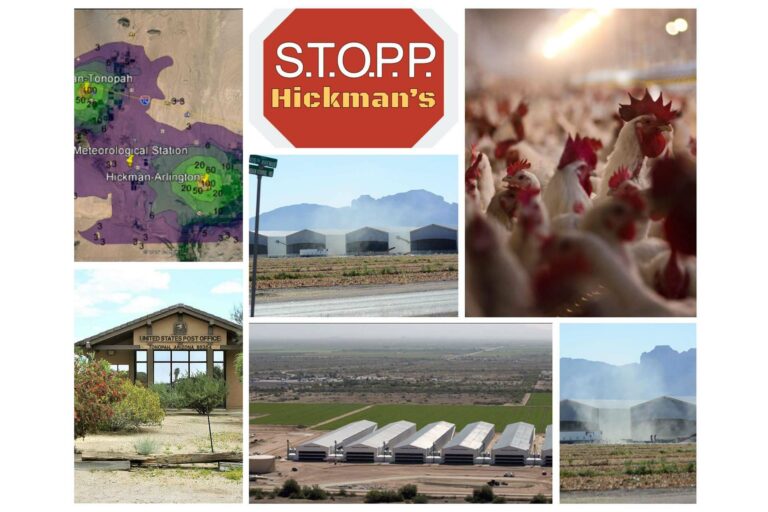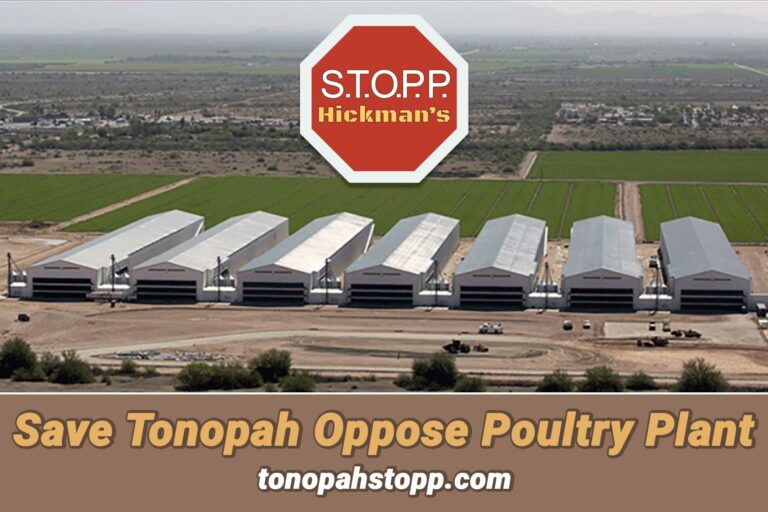

In July 2025, the environmental advocacy group Don’t Waste Arizona released a detailed 115-page report titled “Tonopah Egg Production Plant: History of Events & Concerns.” The document chronicles a series of operational, environmental, and community issues at the facility owned by Hickman’s Family Farms, located in Tonopah, Arizona. Spanning from the plant’s inception in 2014 to recent events in 2025, the report argues that the plant has repeatedly demonstrated poor practices, inadequate regulatory compliance, and a disregard for local residents and the environment. It calls for stronger oversight, remedial actions, and policy changes to protect the community. Below, I’ll summarize the key points from the report, drawing on its accounts of specific incidents and broader systemic failures.
The Catastrophic Avian Influenza Outbreak
The report’s centerpiece is the May-June 2025 avian influenza outbreak that wiped out over 4 million hens at the facility. Residents learned of the “catastrophic mortality event” through news reports rather than direct communication from the owners. Despite the plant’s Nutrient Management Plan explicitly stating no on-site carcass disposal, and various state and federal guidelines recommending off-site hauling to a Subtitle D landfill, the dead birds—contaminated with the virus—were buried on-site in a trench partially located in a floodplain. This decision, the report claims, violated multiple regulations, including Arizona Revised Statutes on agricultural landfills and biosecurity plans. It criticizes agencies like the Arizona Department of Environmental Quality (ADEQ) and Maricopa County for insufficient involvement and post-burial studies, warning of potential groundwater contamination. Recommendations include exhuming the birds for proper disposal, ongoing monitoring of nearby wells for pollutants like avian influenza virus, nitrates, and bacteria, and enforcing Aquifer Protection Permits (APPs) with liners and compliance wells.
Groundwater and Biohazard Risks
Building on the burial controversy, the report delves into aquifer protection, classifying the dead birds as “solid waste” and biohazards under Arizona codes. It argues the on-site landfill qualifies as a discharging facility requiring an APP, which wasn’t obtained. The biohazard section emphasizes that infected carcasses should be treated as medical waste, with disposal plans prioritizing Subtitle D landfills to minimize environmental risks. Expert input from Dr. Albert Heber highlights the need for monitoring contaminants like BOD, TDS, and pathogenic bacteria in private wells, underscoring long-term threats to Tonopah’s water supply.
Airborne Virus and Particulate Emissions
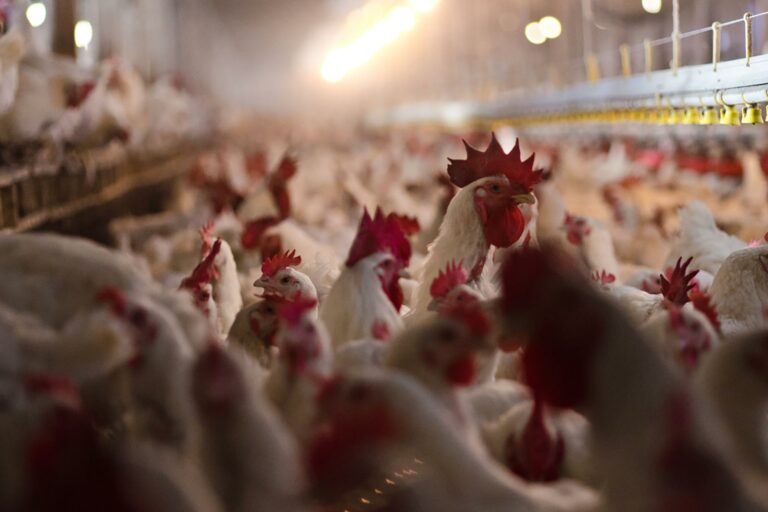
A concerning discussion focuses on potential virus emissions via manure particles. The plant’s massive fans expel untreated air from henhouses containing over 300,000 birds each, discharging up to 46 tons of particulate matter annually (per a 2017 study by Dr. Heber), excluding other sources like lagoons and boilers. The report cites studies showing viruses in chicken feces and a 2025 preprint suggesting windborne transmission of avian flu. It urges immediate field studies on human exposure risks and stricter biosecurity modifications to treat infected birds as biohazards.
Fire Hazards and Building Exemptions
The facility has experienced three major fires: two at Tonopah (2019 and 2024) and one at the related Arlington plant (2021), each destroying henhouses the size of multiple football fields. Built under agricultural exemptions from building codes, inspections, and engineer-stamped plans, the report argues these exemptions endanger nearby communities. It calls for limiting exemptions to structures under 1,000 square feet and mandating fire suppression systems, referencing unsuccessful pleas to legislators like Senator Dunn and Representative Carbone.
Wastewater Discharges and Permit Violations
In early 2023, residents observed red, noxious wastewater discharging from the plant’s egg-wash lagoons into irrigation ditches, occurring multiple times and causing offensive odors. Classified as regulated “process wastewater,” these discharges violated containment rules under Arizona codes. ADEQ issued a Notice of Violation, but the report criticizes the agency’s lenient response, allowing “little” runoff for agricultural use despite clear regulations requiring lined impoundments. It demands clarification in codes and stricter enforcement to prevent environmental disregard.
Breach of Lawsuit Settlement
Following nuisance lawsuits over flies and odors, Hickman’s settled in November 2023, agreeing to cover the wastewater lagoons within a year to reduce odors. As of 2025, the lagoons remain uncovered, with the proposed floating ball system deemed inadequate (covering only 91% and primarily for bird deterrence). The report contrasts this with expert recommendations for impermeable covers with biofilters, accusing the owners of breaching the agreement and showing indifference to residents’ well-being. It calls for accountability and penalties.
Persistent Nuisances: Flies, Odors, and Regulatory Evasion
From 2014 onward, fly infestations plagued homes, requiring constant mitigation efforts and costing residents thousands. Odors, linked to ammonia emissions, drew over 180 complaints in 2016-2017 alone, confining people indoors. The report accuses Maricopa County Air Quality Department (MCAQD) of subtly evading odor regulations by omitting them from permits and stalling revisions to Rule 320. It demands reinstating and enforcing these rules, noting how nuisances even forced the closure of a local RV park.
Improper Air Quality Permitting
The plant’s Non-Title V air permit is scrutinized for excluding henhouse emissions, estimated at 46 tons/year PM10 and 126 tons/year VOCs—thresholds that should trigger a stricter Title V permit. MCAQD classified them as “fugitive” rather than vented, a decision challenged in a 2016 appeal. The report views this as manipulative, urging pressure on agencies to accurately regulate pollution contributing to ozone smog.
No Public Notice for Construction
The plant was built without notifying neighbors, thanks to agricultural exemptions lacking public notice requirements. The report advocates for HB 2503 (2018), which would mandate notices for large operations, emphasizing citizens’ right to know about developments impacting their lives—especially colossal structures housing millions of animals without safety inspections.
Broader Regulatory Failures and “Punishment” of Residents
The report details lawsuits against Hickman’s, including a 2016 EPCRA violation for unreported ammonia emissions, resulting in fines. It criticizes 2021 legislation (HB 2372/SB 1448) that shields agricultural operations from nuisance suits if compliant with weak laws, viewing it as “punishment” for rural residents amid ongoing litigation. Opposition from groups like Sierra Club highlighted how it favors big agribusiness over communities and the environment. The call is for “friendly” regulations promoting innovation to reduce farm pollution, akin to mandates for catalytic converters or landfill liners.
Final Thoughts: A Call for Accountability
Don’t Waste Arizona’s report paints a picture of a facility prioritizing operations over community and environmental health, enabled by lax regulations and agency inaction. It proposes remedies like proper waste disposal, enhanced monitoring, code revisions, and stricter permits to ensure Tonopah residents can “enjoy their property and prosper.” While the document is advocacy-driven, it substantiates claims with statutes, expert opinions, and exhibits (including photos and plans). As of September 2025, these issues remain unresolved, underscoring the need for policymakers to act. If you’re in Arizona, consider reaching out to local representatives to push for change—after all, clean air, water, and neighborhoods shouldn’t be luxuries.