
In the heart of Arizona’s agricultural landscape, where family farms are often romanticized as wholesome pillars of the community, lies a story that’s anything but idyllic. Hickman’s Family Farms, the state’s largest egg producer and a top-20 player nationwide, has built a multi-billion-egg empire since its founding in 1944 by Nell Hickman. Today, under the leadership of brothers Glenn, Billy, and Clint Hickman, the company raises up to 13 million hens across facilities in Arlington, Tonopah, Buckeye, and Maricopa, churning out nearly 2 billion eggs annually. But behind the cheerful branding of “local & fresh” eggs sold at major retailers like Fry’s, Bashas’, and Farmer Boys, a June 2025 report from the Fair Agriculture Council paints a damning picture of exploitation, cruelty, and environmental harm. Titled “Hickman’s Eggs’ Business Model: Exploited Prison Labor, Pollution, Animal Cruelty,” the report forms the backbone of the “Hickman’s Exposed” campaign, hosted on https://www.hickmansexposed.com/, urging consumers and businesses to turn away from this egg giant.
This blog post dives into the allegations, drawing from the campaign’s website, the Fair Agriculture Council’s investigation, and recent developments like a devastating bird flu outbreak. As of September 2025, the controversies show no signs of fading, with Hickman’s facing lawsuits, retailer pullbacks, and public backlash. Let’s unpack the key issues.
A Legacy Built on Prison Labor: Cheap Work at a High Human Cost
One of the most shocking revelations from the Hickman’s Exposed campaign is the company’s heavy reliance on incarcerated labor. Since 1995, Hickman’s has partnered with Arizona Correctional Industries (ACI), a division of the Arizona Department of Corrections, Rehabilitation, and Reentry (ADCRR), to employ hundreds of prisoners—over 300 at peak times—for tasks like operating heavy machinery, cleaning ammonia-filled barns, and processing eggs. These workers, many housed on-site during the COVID-19 pandemic in a makeshift 6,000-square-foot warehouse turned “dormitory,” earn as little as $4.25 per hour, with the state pocketing a significant cut.
The dangers are stark: From 2018 to 2022, at least 250 serious injuries were reported among these workers, including crushed limbs, broken bones, amputations, and even a worker losing a leg to a manure auger. A 2023 Cosmopolitan exposé detailed the plight of 19 incarcerated women injured in just nine months at a Hickman’s labor camp, highlighting hazardous conditions like understaffing and inadequate training. One former worker, Mary Stinson, sued after losing part of a finger to a drill-like auger while fixing a feeder. Another inmate, Gerhart, alleged negligence after a heavy cart incident left him with permanent hand damage.
The campaign accuses Hickman’s of dodging accountability. In 2021, a company lawyer sought to revise contracts to avoid liability for injuries or deaths, a request denied by ADCRR. The following year, a nonprofit led by Billy Hickman lobbied for a law blocking prisoners from including medical costs in lawsuits, which was signed into effect. CFO Jim Manos reportedly blamed injured workers themselves, as reported by the Phoenix New Times. The Fair Agriculture Council, which supports fair wages and safe conditions for incarcerated individuals, calls this “exploitation masked as rehabilitation.”
Hickman’s defends the program as a reentry opportunity, with rigorous selection and post-release job preferences. But critics argue it’s a cost-saving scheme that endangers vulnerable people for profit.
Animal Cruelty in the Shadows: From Cages to Corpses
Hickman’s has long marketed itself as committed to hen welfare, with CEO Glenn Hickman claiming it’s a “top priority.” Yet, undercover investigations tell a different story. In 2019, Direct Action Everywhere (DxE) released footage from a Hickman’s facility in Arlington showing hens crammed into battery cages—each bird allotted space barely larger than a sheet of printer paper. The video captured decomposing corpses left amid living birds, open sores, feather loss, and birds gasping in ammonia-laden air so thick it burned their eyes.
Even in so-called “cage-free” areas, the conditions are dire: Birds packed so tightly they can’t move, contradicting the company’s public stance. The Hickman’s Exposed site features this footage, emphasizing how these practices persist despite Arizona’s 2020 cage-free law (HB 2724), which Hickman’s initially supported to preempt a stricter Humane Society ballot initiative. The law was set to ban non-cage-free egg sales by 2025 (delayed to 2026 due to bird flu), but in 2025, amid soaring prices, Hickman’s and industry lobbyists pushed to scrap or further delay it to 2034—or even eliminate it entirely. Governor Katie Hobbs directed the Arizona Department of Agriculture to delay implementation by seven years in March 2025, citing a 38% egg price hike from avian flu. Critics, including the Fair Agriculture Council, call this a betrayal, accusing Hickman’s of using the original support as a PR stunt while lobbying for delays to avoid costly conversions.
This reversal has drawn ire from animal rights groups, who argue it prioritizes profits over preventing suffering. As one resident quoted in the report put it, Hickman’s hens endure “a living hell” in facilities that produce ¾ million eggs per hour.
Environmental Nightmares: Pollution and Retaliation
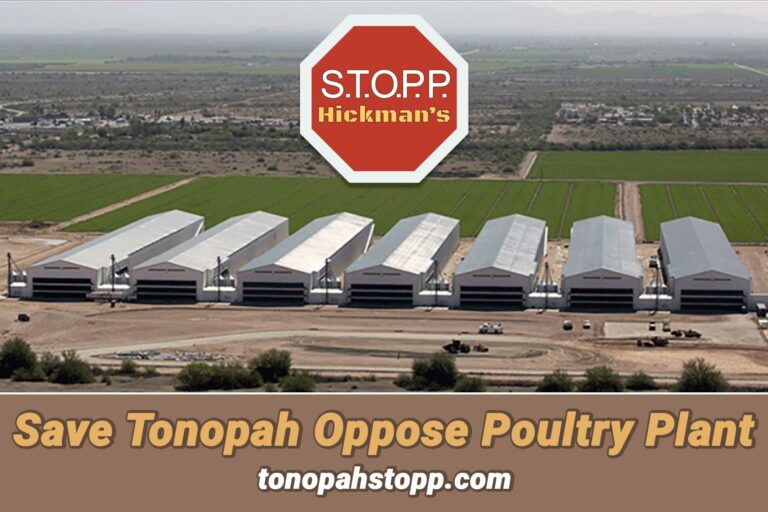
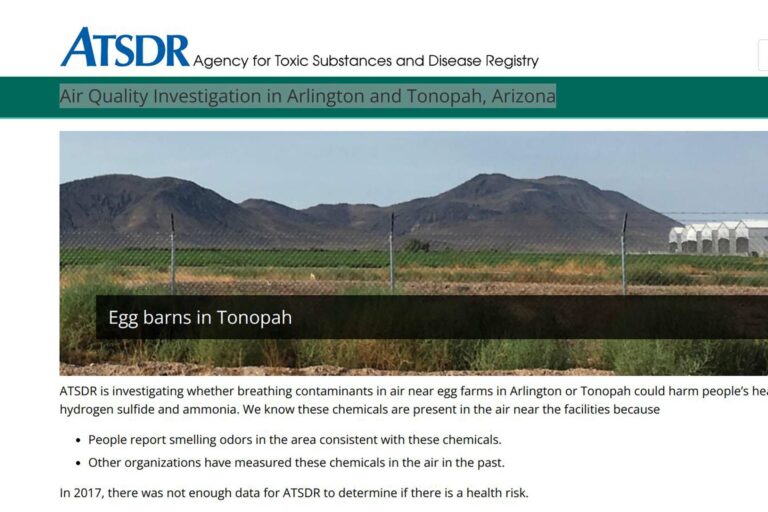
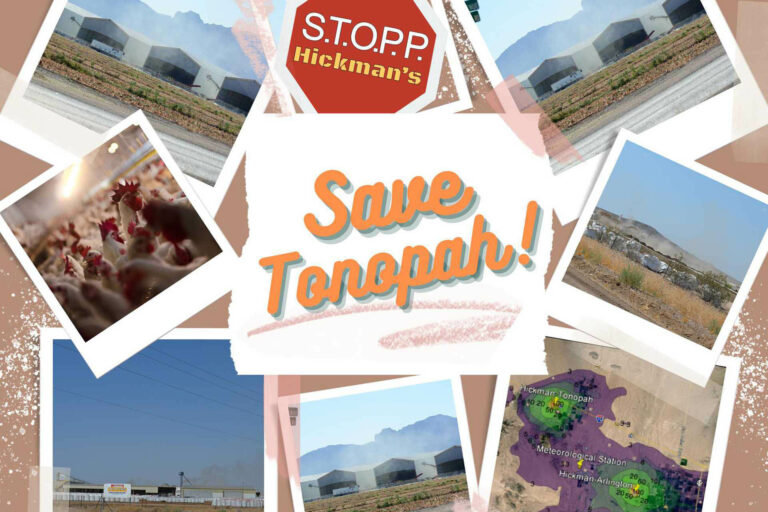
The Tonopah facility, one of Hickman’s largest, is a hotspot for environmental complaints. The campaign alleges daily ammonia emissions exceeding 1,000 pounds, creating a stench likened to “decaying flesh” that drives away residents, infests homes with flies and feathers, and plummets property values. Neighbors have sued over health issues like respiratory problems and property damage, only to face retaliation: Hickman’s allegedly flew drones over their homes and pursued aggressive litigation.
In 2018, a federal court fined the company $3,000 for failing to report hazardous emissions, a slap on the wrist for a multi-million-dollar operation. The Fair Agriculture Council report details how multiple families have abandoned homes or closed businesses due to the pollution, with one resident describing it as an “industrial blight, not a typical farm.”
These issues compound with the company’s waste management. Hickman’s touts innovations like recycled plastic egg cartons produced via ACI partnerships, but critics say this greenwashing ignores the broader toxic footprint.
The Bird Flu Catastrophe: A Perfect Storm of Vulnerability
Compounding these scandals, Hickman’s suffered a massive avian flu (H5N1) outbreak in 2025. In February, it lost over 1 million hens (20% of its flock) at a Maricopa farm, forcing culls and contributing to nationwide egg shortages and price surges. By May, the virus struck harder: 95% of Arizona birds—about 6 million—died or were euthanized across three West Valley farms, despite biosecurity measures like showers, lasers, and air cannons to deter wild birds.
CEO Glenn Hickman announced a two-year recovery period, layoffs of hundreds from its 850-employee workforce (including ending the inmate program), and a plea for U.S. approval of bird flu vaccines—already used in Europe but blocked here to protect poultry exports. Carcass disposal raised alarms: Trenches dug in Tonopah for mass burials sparked fears of groundwater contamination, echoing past neighbor disputes. The EPA prefers composting or landfills, but state approvals allowed on-site burial.
Some online commentators called it “karma” for poor animal welfare, but former employees defend Hickman’s biosecurity efforts, noting the virus’s airborne nature made containment impossible. The outbreak has amplified calls for reform, with the American Egg Board highlighting its “lethal and devastating” national impact.
Retailer Backlash and Calls to Action
The Hickman’s Exposed campaign targets retailers still sourcing from the company: AJ’s Fine Foods, Food City, Bashas’, Fry’s, and Farmer Boys. It urges boycotts and emails to executives, noting that majors like Sprouts, Costco, and McDonald’s have already distanced themselves—partly due to cage-free demands and these scandals. The site features videos, like a 12 News report on the Tonopah stench, and links to the full report.
The Fair Agriculture Council demands independent investigations into labor, welfare, and environmental practices, arguing Hickman’s “broken promises” demand accountability.
The Road Ahead: Time for Consumers to Crack the Shell?
Hickman’s insists it’s a family business innovating for sustainability—closing waste streams, employing robotics, and supporting reentry programs. But the evidence from investigations, lawsuits, and footage suggests a model prioritizing profits over people, animals, and the planet. As egg prices climb and the bird flu recovery drags on, the Hickman’s Exposed campaign is a wake-up call for Arizona consumers: Your carton might be local, but at what cost?
If you’re in Arizona, consider switching to ethical alternatives from smaller, transparent producers. Visit hickmansexposed.com to learn more and join the push for change. The egg industry is evolving—will Hickman’s adapt, or crack under pressure? Share your thoughts in the comments.